World War 2-FPS Shooting Games
- 4.4
- Rating
- 50.00M
- Installs
- Free
- Price
 Analysis by App-foxy
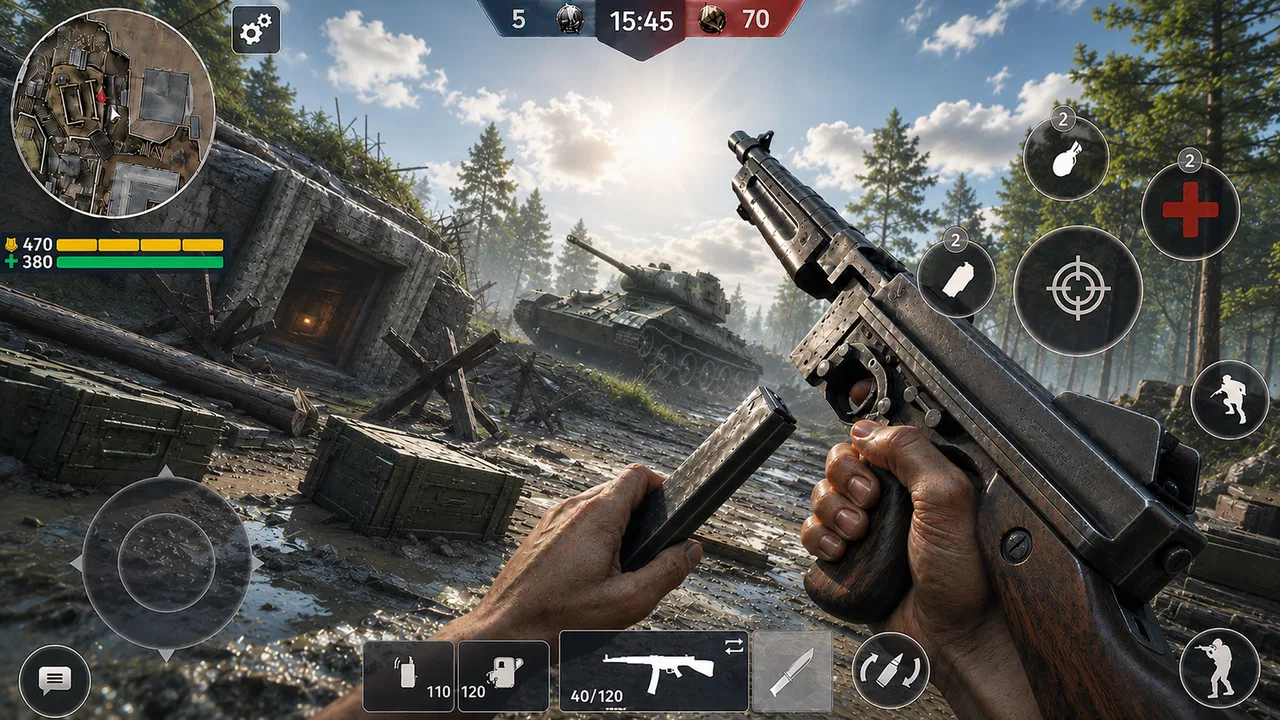
World War 2-FPS Shooting Games is the kind of mobile action game I open when I want a quick burst of military combat rather than a slow, story-heavy experience. It comes from Edkon Games GmbH and focuses on World War II-style first-person shooting, with multiplayer action at its center. I found the appeal easy to understand: matches are built around immediate movement, aiming and reaction, so I can get into the action without first learning a complicated campaign.
The game is free to download, which makes trying it straightforward. It is rated Teen, runs on Android 8.0 or later, and its current version is 5.06. The audience is already substantial, with more than 50 million installs, an average score of 4.4 from roughly 564 thousand ratings, and about 8.6 thousand written reviews. Those figures suggest that the game has reached far beyond a small niche, but they do not remove the need to look closely at how it feels to play, especially if spending money is a concern.
How the World War II shooting experience feels in practice
My first impression is that this is designed around momentum. The best moments come when I stop treating each encounter as a random firefight and start reading the space around me: likely approach routes, exposed angles and the places where an opponent can appear with little warning. That makes the game more satisfying than simply holding the fire button and hoping for a favorable exchange.
You May Also Like

 Blood Strike: 2.5 Anniversary
Blood Strike’s Loadouts Turn Every Drop Into a Tactical Gamble
A close look at Blood Strike’s custom loadouts: how fast access to signature weapons reshapes its battle royale rhythm, rewards preparation, and narrows the gap between fights.

 Pandora - Music & Podcasts
Pandora’s Music Is Easy to Start, but Harder to Recover
Pandora’s strength is its low-effort path from a seed to a station. Its weak spot is how much confidence it asks you to place in connection, setup, and quiet recovery.

 8 Ball Pool
 Is Built on Rivalries, Rematches, and Routine
A close look at the rivalries, rematches, shared routines, and unanswered safety questions that turn a quick pool match into a persistent mobile community.

 Samsung Music
’s Quiet Strength Is Playing What You Already Own
Its reach comes less from spectacle than from dependable access to a personal library. That simplicity is both the app’s strongest retention engine and its ceiling.

 AccuWeather: Weather Radar
AccuWeather Review: A Quick, Clear Forecast for Everyday Decisions
For everyday plans, the best forecast is the one you can understand quickly. AccuWeather makes rain timing, radar, and local conditions easy to act on, with a few trade-offs.

 Hill Climb Racing
Why Hill Climb Racing Still Turns Crashes Into One More Run
A tiny car, a bumpy hill and one more upgrade: Hill Climb Racing keeps resurfacing because its simple chaos makes every near-miss feel personal.
More From Our News Desk



The historical setting gives the action a different character from modern military shooters. The presentation is built around World War II combat rather than futuristic equipment or contemporary tactical gadgets. That choice matters because it sets expectations. Players who enjoy the visual identity of older weapons and battlefields will probably connect with it more quickly, while anyone looking for a highly realistic simulation may find the mobile format too streamlined.
I would describe the controls as approachable rather than demanding in the way a dedicated PC shooter can be. On a phone, the challenge is always balancing visibility, movement and touch input. A larger screen makes it easier to track targets and react to attacks from the side, while a smaller display can make crowded encounters feel less comfortable. If you usually play with your thumbs, I would spend time adjusting the layout before judging the game. A poor control arrangement can make an otherwise manageable match feel unfair.
One useful habit is to avoid changing several control settings at once. I get a clearer sense of what helps when I adjust one element, play a few rounds, and then decide whether the change actually improved aiming or movement. This is a small point, but it prevents the common mistake of copying another player’s setup without considering screen size, hand position or personal reaction speed.
Short sessions work well, but concentration still matters
This is a good fit for a spare ten or fifteen minutes, such as waiting for an appointment or taking a break between tasks. The quick-action format means I do not need to reserve an entire evening to enjoy it. At the same time, the shooting is active enough that I cannot play it casually while watching something else. Missing visual cues for even a moment can turn a promising round into a frustrating one.
That creates an important everyday trade-off. If I have only a short break but want something interactive, the game makes sense. If I am tired and looking for a relaxing experience, it may be the wrong choice. Multiplayer combat rewards attention, and repeated losses can feel more personal than losing against computer-controlled opponents.
I also recommend using headphones when possible, not because they guarantee better results, but because sound can help me notice activity that is outside the center of the screen. I still treat audio as a supporting clue rather than a perfect warning system. Looking around remains essential, and relying on one signal can make me predictable.
Progress feels more useful when I set a narrow goal
One of the more practical ways to approach the game is to give each session a specific purpose. Instead of judging the whole experience by whether I win, I might focus on improving positioning, surviving longer in open areas or learning when to stop chasing an opponent. This makes individual matches feel productive even when the final result is disappointing.
That approach is especially helpful for new players. Early frustration often comes from trying to improve aim, movement, map awareness and equipment decisions simultaneously. I make faster progress when I isolate one weakness. For example, if I am losing because I expose myself too often, I can work on using cover and choosing safer routes before worrying about faster reactions.
The pressure increases when progress becomes connected to performance. A strong round can encourage me to keep playing, while a sequence of poor rounds can tempt me to spend money simply to change the situation. I think it is important to recognize that feeling before making a purchase. If the problem is positioning or unfamiliarity with the controls, new content may not solve it.
What free access means for spending decisions
The game is free, but it includes in-app purchases ranging from $0.99 to $119.99 per item. That is the most important financial context for a prospective player. The range stretches from a small impulse purchase to a much larger commitment, so I would not treat the word “free” as a complete description of the cost experience.
I prefer to decide in advance whether I am willing to spend anything. If the answer is no, I can evaluate the game on its free experience instead of viewing every locked or paid opportunity as a problem. If I am open to spending, I would set a firm limit and avoid buying immediately after a frustrating loss. A purchase made under pressure is rarely a good test of value.
There is also a difference between paying for convenience and paying because the basic experience feels uncomfortable. The first can be a personal choice; the second is a warning sign for me. I would play long enough to understand the normal rhythm of combat before considering any item. That gives me a better chance of knowing whether I genuinely enjoy the game or simply want to escape an early learning curve.
Fairness is difficult to judge from the store page alone
I take a cautious view of competitive fairness here. The game is multiplayer, and the purchase range is clearly published, but those facts alone do not establish whether paid items create a decisive advantage, mainly save time, or serve another purpose. I would not promise a perfectly level playing field, and I would not claim the opposite without direct evidence from sustained play.
For a competitive shooter, that distinction matters. If equipment affects damage, protection or other important outcomes, spending could change how matches feel. If purchases are mostly about appearance or convenience, the concern is different. Since the available description does not explain that relationship, I think readers should approach the game with measured expectations rather than assuming either a purely cosmetic model or a pay-to-win system.
My practical advice is to observe results before spending. Notice whether defeats usually come from clear mistakes, unfamiliar surroundings or opponents who appear to have an equipment advantage. One match can be misleading, especially in a fast mobile shooter. Patterns over several sessions are more useful than a single frustrating encounter.
Another fairness issue is the difference in player experience. Someone who has spent a long time learning the game may look overwhelmingly strong to a newcomer even without a purchase advantage. That is why I would not compare my first few sessions with experienced players and immediately blame the economy. Learning routes, timing and defensive habits can make a dramatic difference.
Who will enjoy it, and who should skip it
I think the game suits players who want a focused World War II action setting, enjoy first-person multiplayer combat and are comfortable improving through repeated matches. It also works for people who prefer mobile sessions that begin quickly rather than long narrative campaigns. The Teen rating is worth considering for families, especially when deciding whether its combat style is appropriate for a younger player.
I would be more hesitant to recommend it to someone who wants a quiet single-player game, a historically detailed simulation or a completely pressure-free free-to-play experience. It is also not my first suggestion for a player who dislikes touch controls or becomes annoyed when other players have more practice. Those are not minor details in this genre; they shape the experience every time the game is opened.
Compared with a campaign-focused action game, this title places more weight on replayable competition and less on a carefully paced story. Compared with a slower tactical shooter, it is better suited to immediate action and shorter sessions, but it may offer less room for deliberate planning. The right choice depends on whether I want to test my reactions against other players or follow a structured solo adventure.
Questions I would settle before installing
One question is whether the game needs a powerful, recent phone. The stated minimum is Android 8.0, so compatibility begins there, but the operating-system requirement does not tell me how smoothly every device will perform. I would pay attention to heat, battery use and control responsiveness during the first session rather than assuming that meeting the minimum requirement guarantees an ideal experience.
Another question is whether the game is suitable for occasional play. I think it can be, provided I accept that multiplayer skill develops over time. A player who returns only once in a while may still enjoy individual rounds, but may feel less comfortable against people who play regularly. Setting modest goals makes occasional sessions less discouraging.
Readers may also wonder whether they must spend money to compete. I would not make that claim either way. The published purchase range confirms that optional transactions exist, but it does not by itself reveal their competitive impact. My recommendation is to begin without spending, learn the controls and observe the match experience before deciding whether any purchase has a clear personal value.
It is equally reasonable to ask whether this is a good game for children. The Teen content rating means parents should make that decision with the game’s combat focus and multiplayer setting in mind. I would also discuss spending boundaries before handing the device over, because the available purchases reach well beyond a token amount.
My trust verdict after weighing the trade-offs
I see World War 2-FPS Shooting Games as a straightforward choice for mobile players who specifically want World War II-themed multiplayer shooting. Its large audience and strong average rating show that the format has broad appeal, while the free entry point makes it easy to test personally. Edkon Games GmbH has built the game around quick action rather than a slow introduction, which is exactly why it can work so well during a short break.
My recommendation comes with a clear condition: treat the free version as the trial, not as a promise that spending will be necessary or harmless. The in-app purchase range is wide, and the available information does not establish how purchases affect competitive balance. I would therefore judge the game first by its controls, match flow and enjoyment without paying.
The smartest way to start is to learn the combat rhythm before letting the purchase system influence your opinion. Adjust controls gradually, play with a specific improvement goal, and watch for repeated patterns rather than reacting to one bad round. If you enjoy the setting and the pressure of multiplayer firefights, this can become a reliable action game for short sessions. If you want a calm, story-led or fully transparent competitive experience, I would choose a different kind of shooter instead.
Overall, I would recommend giving it a careful try, especially if the World War II setting matters to you. I would not recommend spending immediately, and I would not install it expecting a simulation. For me, its value rests on accessible mobile combat, quick replayability and the willingness to accept the uncertainties that come with a free multiplayer game. That makes it worth testing, but not something I would approach without boundaries.
FAQs for World War 2-FPS Shooting Games
01What is World War 2-FPS Shooting Games about?
World War 2-FPS Shooting Games is a first-person shooter centered on military battles inspired by World War II. You take part in missions involving infantry combat, enemy positions, battlefield objectives, and historically themed weapons. The game is designed for players who enjoy action-focused shooting, campaign-style challenges, and competitive combat scenarios rather than a slow or purely strategic war simulation.
02Can I play World War 2-FPS Shooting Games offline?
Some missions or features may be available without a constant internet connection, but online access can still be required for advertisements, updates, cloud-related functions, events, or multiplayer modes. Before downloading, players should check the store description and test the game on their device. Offline availability can also vary between Android and iOS versions and may change after future updates.
03Is World War 2-FPS Shooting Games free to download?
The game can generally be downloaded for free, but free access may include advertisements, optional purchases, or systems that help unlock weapons, upgrades, missions, and other content. You can usually begin playing without paying, although progress may feel slower if you avoid in-app purchases. Review the store listing carefully to understand the available purchases and any age or payment restrictions.
04What devices are compatible with the game?
Compatibility depends on the operating system version, available storage, processor, memory, and graphics performance of your phone or tablet. Newer devices normally provide smoother controls, faster loading, and more stable frame rates, while older hardware may experience reduced performance. Check the official Google Play or App Store requirements before installing, and keep enough free storage for updates and additional game data.
05Does the game include multiplayer or competitive modes?
World War 2-FPS Shooting Games may offer more than campaign missions, including competitive or online combat features depending on the version and current update. Multiplayer modes can require a stable internet connection and may match you with players using different skill levels. If you mainly want a solo experience, confirm which missions work offline and whether online features are optional before downloading.
Pros
- Fast-paced missions with varied World War II combat scenarios
- Simple controls make shooting and movement easy to learn
- Offline play is useful when you have no internet connection
- Multiple weapons offer different approaches to enemy encounters
- Short missions work well for quick gaming sessions
Cons
- Repetitive objectives can make longer play sessions feel predictable
- Enemy artificial intelligence is sometimes noticeably limited
- Frequent ads may interrupt gameplay between missions
- Upgrades and weapon progression can feel slow without extra rewards
- Graphics quality may vary across devices and older phones

World War 2-FPS Shooting Games
Gallery